My master’s thesis at Kent State University, on how intentional design pays the business back. Published on Bootcamp in October 2025.
I was introduced to the UX field at a young age. As a senior in high school, I was already studying design thinking. I wrote about how design could change outcomes, and that’s when I came up with a phrase that has followed me ever since: extraordinary solutions through an intentional process.
That idea became the foundation of how I approach UX. To me, great design isn’t just about what we make, but why we make it, and how it delivers extraordinary value. That’s why I chose this topic: to explore how intentional design directly connects to business outcomes, strategy, and the measurable return on investment that proves UX is more than a pretty screen. It’s a business advantage.
What ROI means in UX
When we talk about return on investment, or ROI, we’re usually talking about money. But in UX, ROI is not just financial return. It’s about value creation through usability, adoption, and alignment between users and the business.
In an interview with a UX professional, he described a time his team identified a key action a persona needed to take, and designed an experience that reduced the time to complete it. That’s a tangible return. He improved efficiency, increased adoption, and made the product more valuable to the people using it. This story is common on high-performing UX teams, and it explains the value of investing in UX.
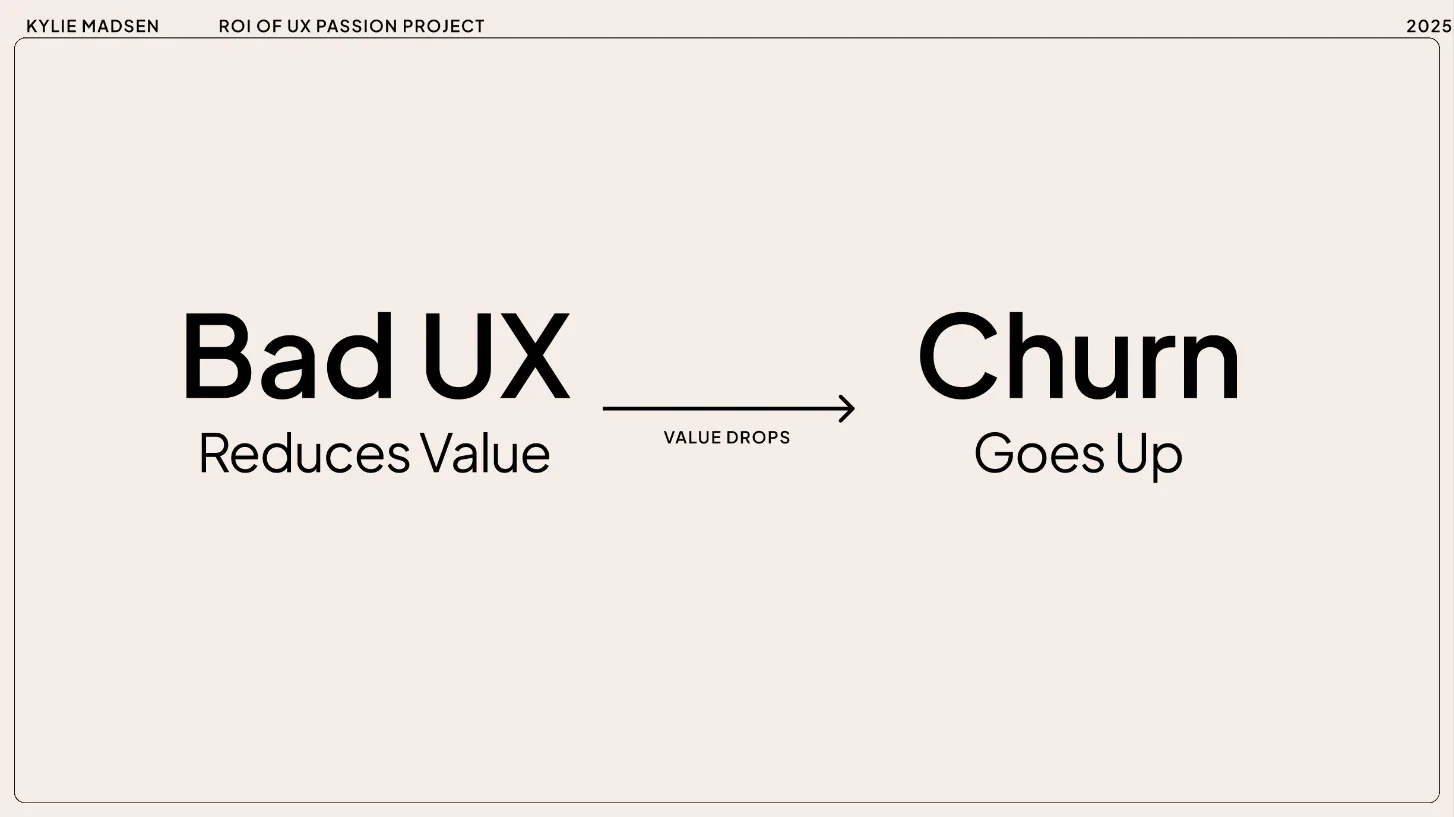
Because bad usability directly reduces value. And when value drops, churn goes up.
When we talk about ROI in UX, we’re talking about preventing churn, increasing adoption, and enabling teams to move faster with fewer support costs, all of which have measurable financial impact.
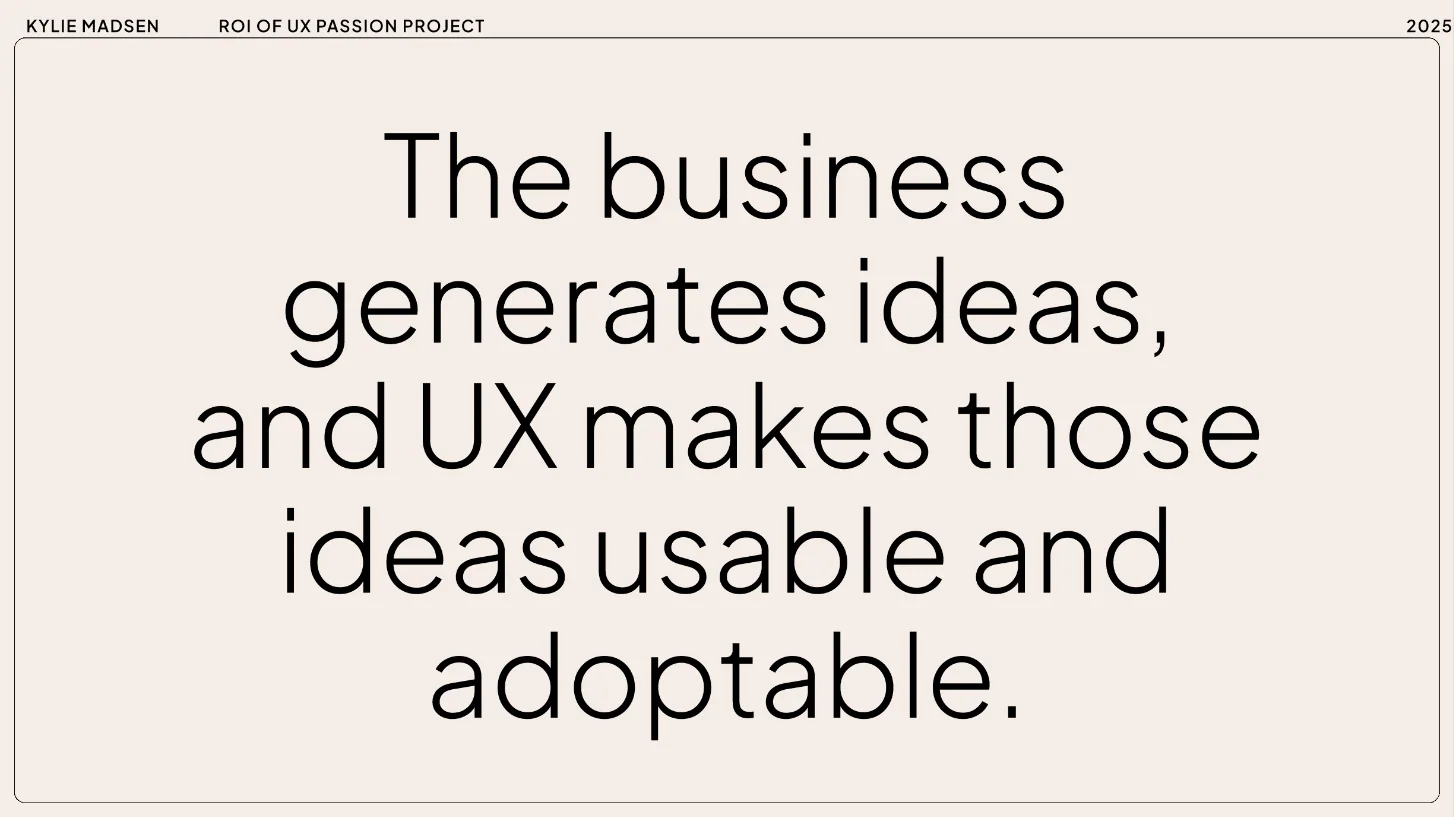
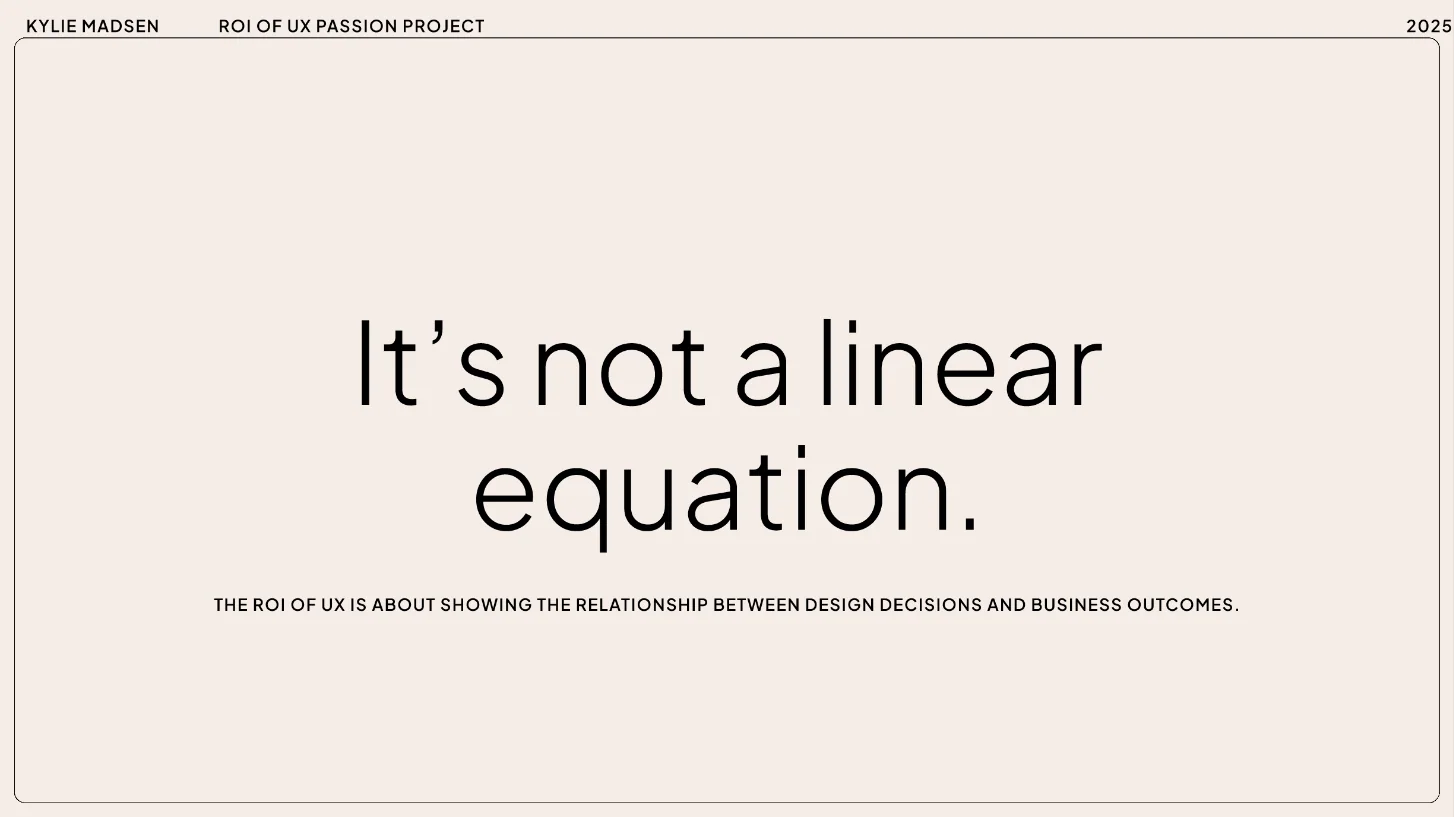
UX ROI is about showing the relationship between design decisions and business outcomes. It’s not a perfectly linear equation. Our job as designers is to translate ideas, present problems clearly, and be the bridge between business and user needs. We’re well suited and well trained to innovate in that space.
Ultimately, UX design is about uniting business and users for an effective use of time. Our goal is to find our value add, and reduce the time to it. A strong UX ROI shows up in higher conversion rates, increased loyalty, and reduced operational costs. It proves that when we invest in usability, we invest in the business itself.
“I don’t care about what they say, I care about what they do.”
Don Norman
There are two ways to read this quote for what we’re talking about. First, it’s the essence of UX: we don’t just listen to users; we watch where they struggle, where they succeed, and where friction slows them down. Reducing friction in workflows that directly contribute to client revenue is where UX delivers its highest ROI.
Second, it’s how people investing in UX think. It’s not about buzzwords, fancy prototypes, or good visual design. It’s about action, and what we do. So we have to ask:
What features or areas of our product do our customers find the most value in?
When in the journey are they making money, and making money for us?
That’s where businesses invest. We design to reduce the time to value, shorten the path to revenue, and iterate until friction disappears.
For the investor, it’s about money in and money out. If I hire this UX team, how will they keep users spending money on our product, attract new customers, and lower costs across our organization?
Jared Spool once calculated that a small UI improvement at Amazon generated $2.7 billion in additional revenue. Jeff Bezos said it best:
“We see our customers as invited guests to a party, and we are the hosts. It’s our job every day to make every important aspect of the customer experience a little bit better.”
Jeff Bezos
That mindset, the daily investment in a better experience, is ROI on UX in action. High conversion rates, higher loyalty, and lower support costs are all of high interest to business leaders and shareholders, and they’re all signals of effective UX.
Thoughtful design also reduces rework, speeds up time to market, and streamlines development, which compounds savings over time. User research early in the process reduces risk when prioritizing initiatives. While developers build the software, UX makes sure we’re building the right solution, for the right users, in the right way.
So when companies stop investing in UX, they’re not saving. They’re deferring costs and losing opportunity.
UX debt and the cost of friction
Then there’s UX debt. The quiet kind of debt that doesn’t break builds or block shipping. It just sits there, draining trust and money over time. Here’s what it looks like:
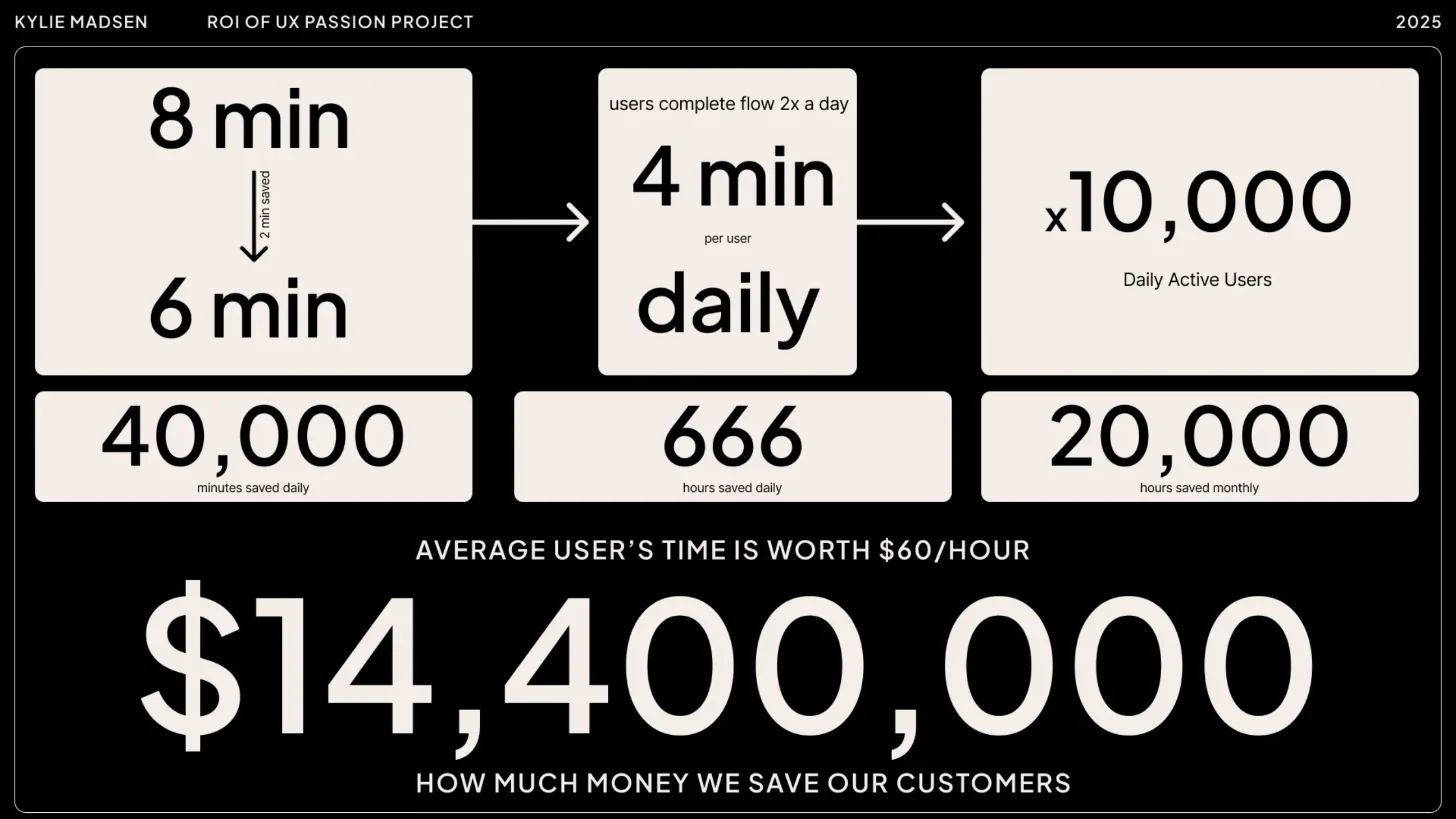
A key flow takes 8 minutes. A redesign brings it to 6, a two-minute improvement.
Users run that flow twice a day: 4 minutes saved per user, per day.
Across 10,000 users, that’s 40,000 minutes saved daily, about 666 hours a day.
Over a month, that’s 20,000 hours saved.
At $60 an hour, that’s $1.2 million a month, or $14.4 million a year.
All from fixing a single flow. That’s the math and mindset behind friction.
Unless UX connects those dots for leadership, those wins go unseen. Executives don’t feel bad about extra clicks; they feel bad about missed targets. Our job is to make them understand the cost of friction, and to show that UX debt is product debt, and product debt is business risk.
“It is easy to find fault. The key is to be able to do things better.”
Don Norman, The Design of Everyday Things
That’s what UX does: we make things better for users and for the business.
Three examples, in measurable results
The $300 million button
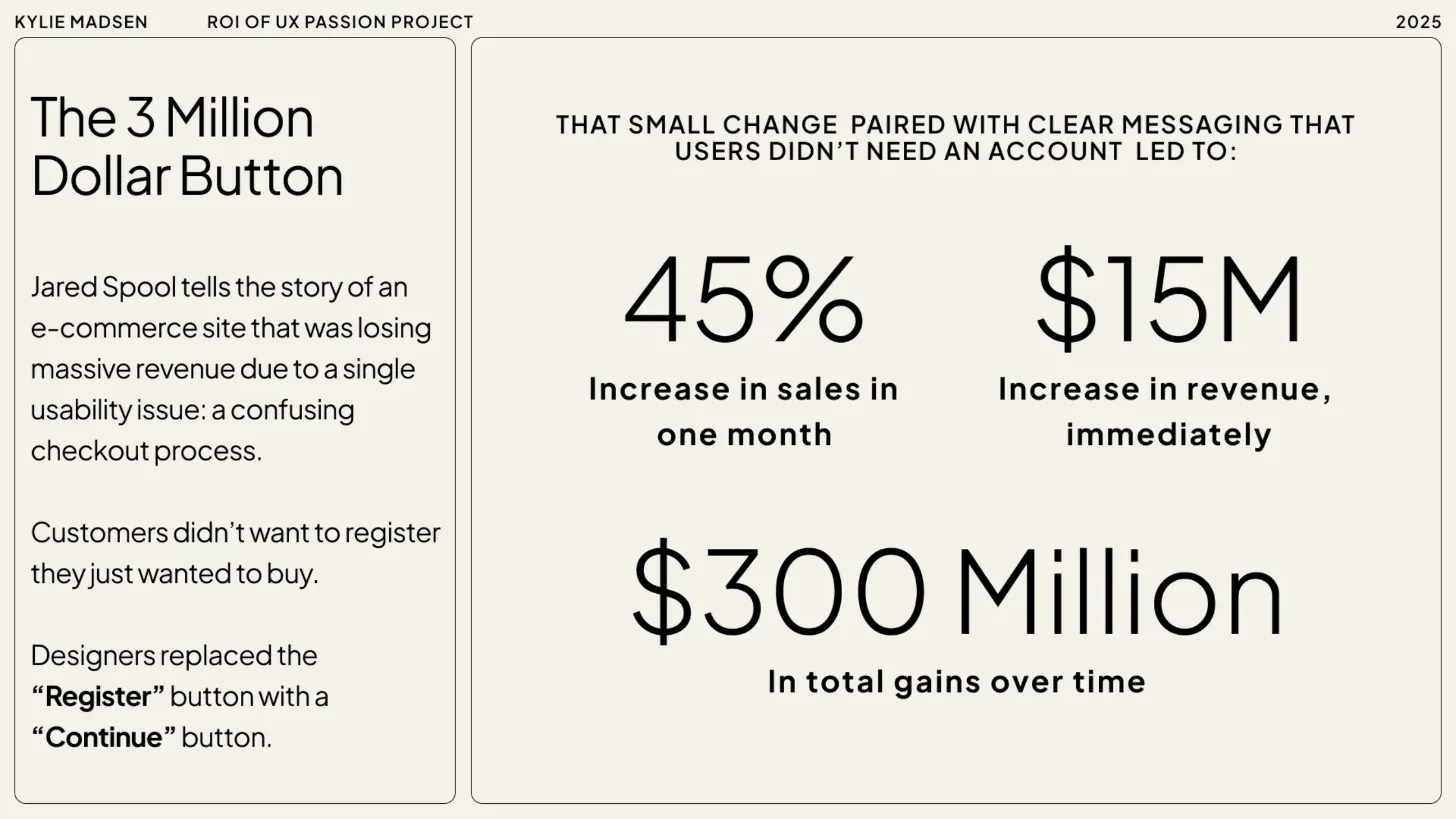
In Web Form Design: Filling in the Blanks, Jared Spool tells the story of an e-commerce site losing massive revenue to one usability issue: a confusing checkout. Customers didn’t want to register; they just wanted to buy. The design team ran usability tests, found the friction, and replaced the “Register” button with “Continue.” That change, paired with clear messaging that users didn’t need an account, led to a 45% increase in sales in the first month, $15 million in immediate revenue, and over $300 million in gains over time.
HubSpot’s record page redesign
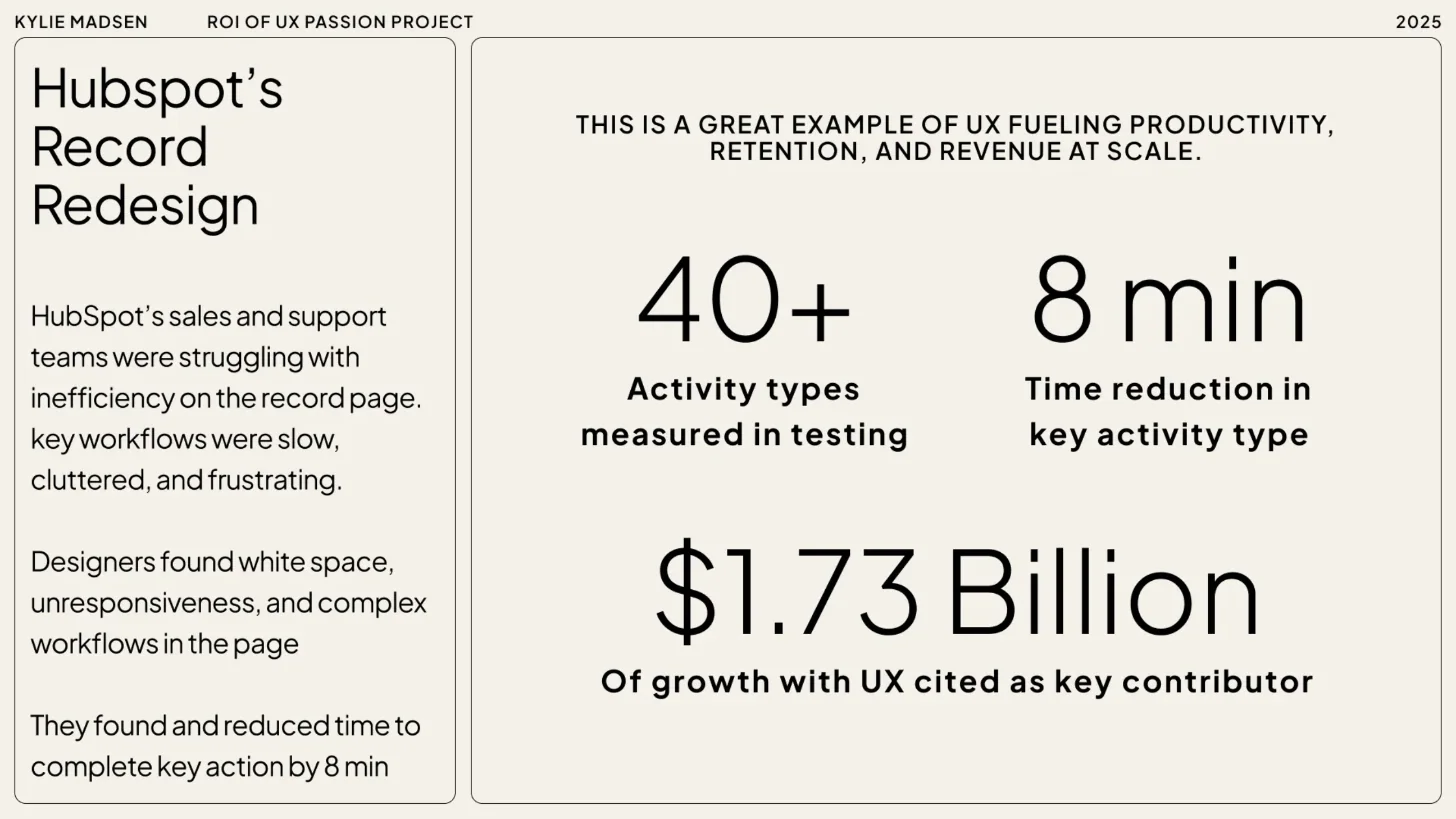
HubSpot’s sales and support teams were struggling with inefficiency on the record page. Key workflows were slow, cluttered, and frustrating. The UX team started with data: CSAT, NPS, and usability testing across 40 activity types. They found unresponsiveness, too much white space, and complex interactions that caused an 11% drop in user activity. Through iterative design and live experiments, they simplified the interface, reduced load time, and cut email response time from 8 minutes to seconds. HubSpot’s revenue grew 33% year over year to $1.73 billion, with usability cited as a key contributor to adoption and workflow efficiency.
RoofLink’s Multiple Estimates
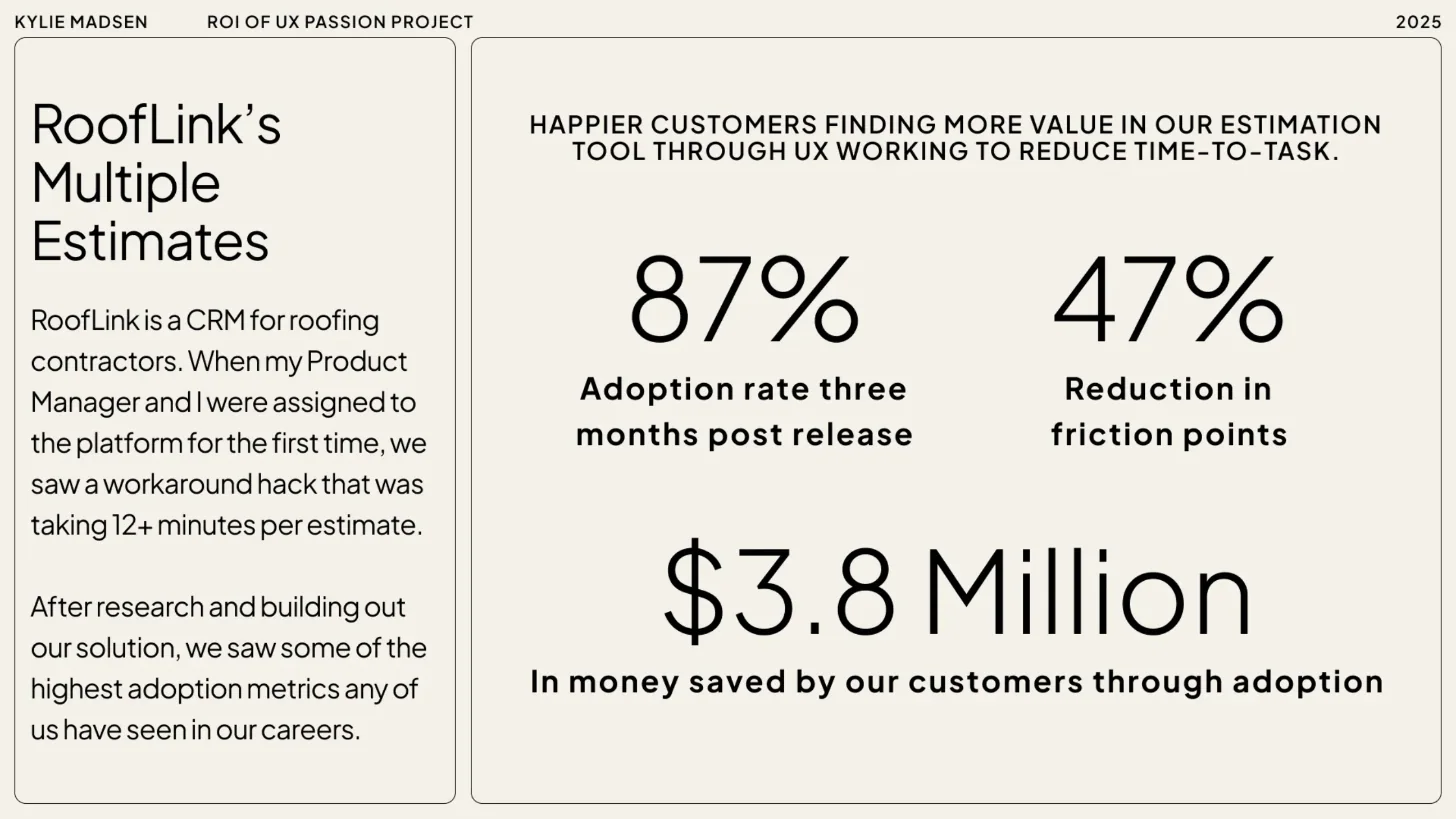
RoofLink is a CRM for roofing contractors. When my product manager and I were assigned to the platform, we found a workaround that was taking reps 12+ minutes per estimate. After proper discovery, documenting user flows, and building our solution, we saw some of the highest adoption metrics any of us had seen in our careers: 87% adoption three months after release, customers still talking about it six months later at a company event, a 47% reduction in friction points, and around $3 million a year in time savings for our customers. Read the case study.
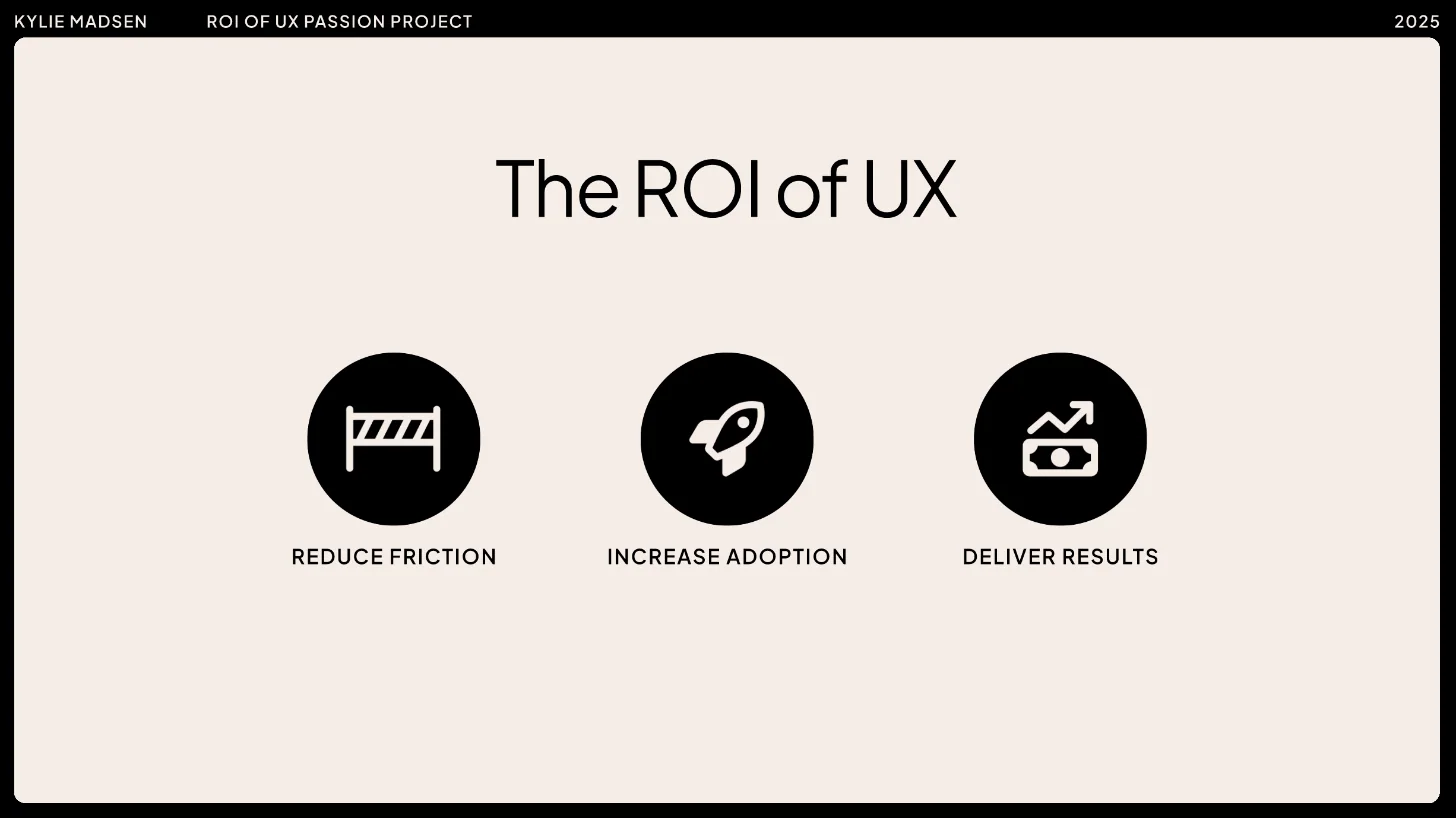
Across these examples the pattern is clear. UX reduces friction, increases adoption, and delivers measurable financial results. Done well, it turns small design improvements into large business impact.
Understanding design as a practice isn’t enough if we can’t articulate its business value. ROI is how we show that UX isn’t only about making things look good or work better; it’s about creating measurable value. For that to resonate, designers and design leaders need to think and speak the language of investors.
Business fluency matters
I’ve seen brilliant designers create elegant solutions, but if they can’t explain how it helps the business win, it rarely gets prioritized.
Design leaders especially have to be fluent here. They translate between disciplines, helping executives see how design drives profit, retention, and efficiency, while making sure their team keeps quality craft and output. Without that fluency, design gets treated as optional decoration. With it, design becomes a strategic partner.
The frame of mind
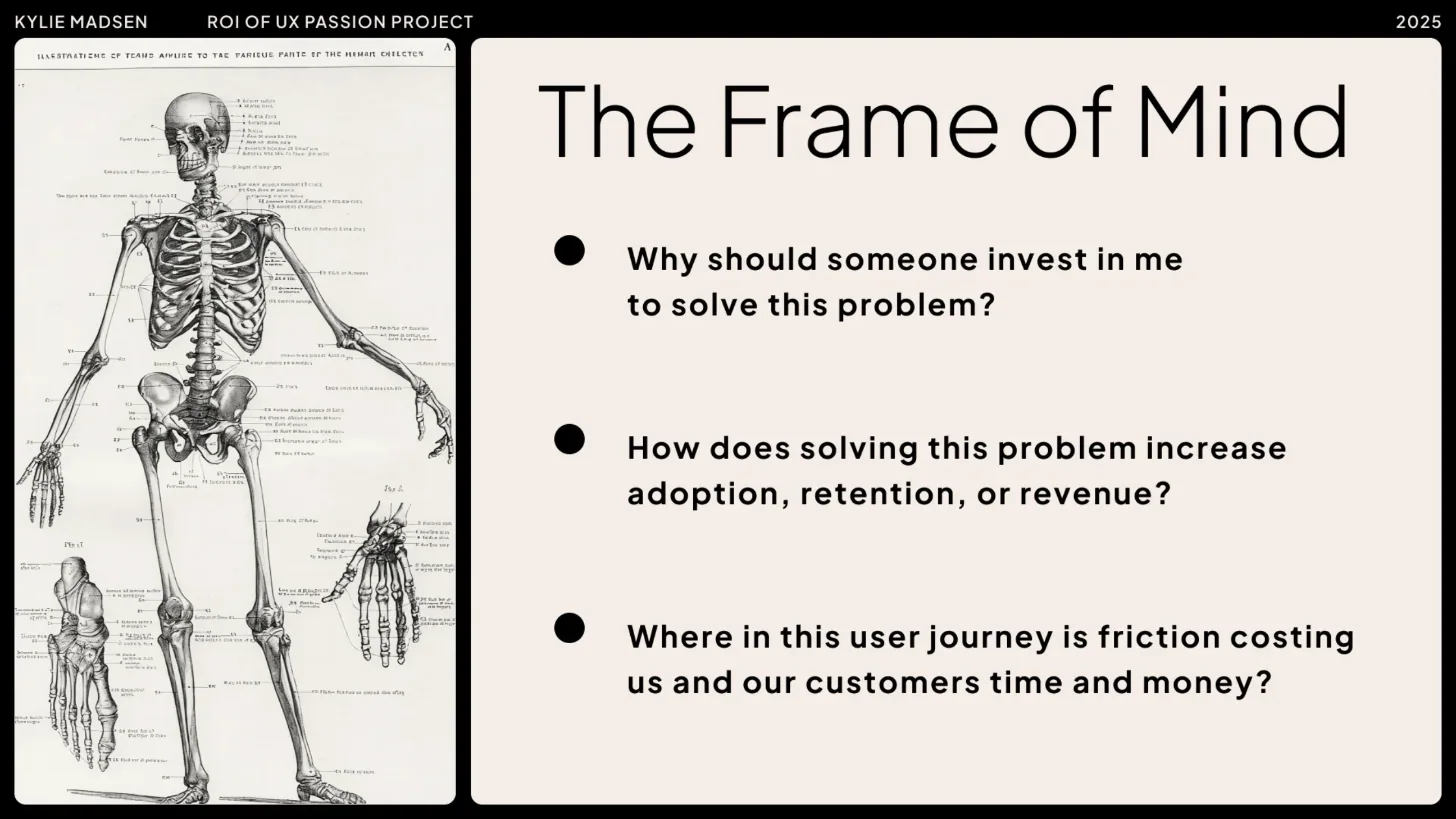
Business fluency isn’t just knowing metrics. It’s thinking in outcomes, and using our storytelling skills to communicate those outcomes from discovery to handoff. Three questions to ask, every time:
Why should someone invest in me to solve this problem?
How does solving this problem increase adoption, retention, or revenue?
Where in this user journey is friction costing us and our customers time and money?
It’s a shift from “did users like it?” to “did we deliver measurable value to both our users and our company?” That’s what gets attention, because that’s what UX success looks like.
The language of business
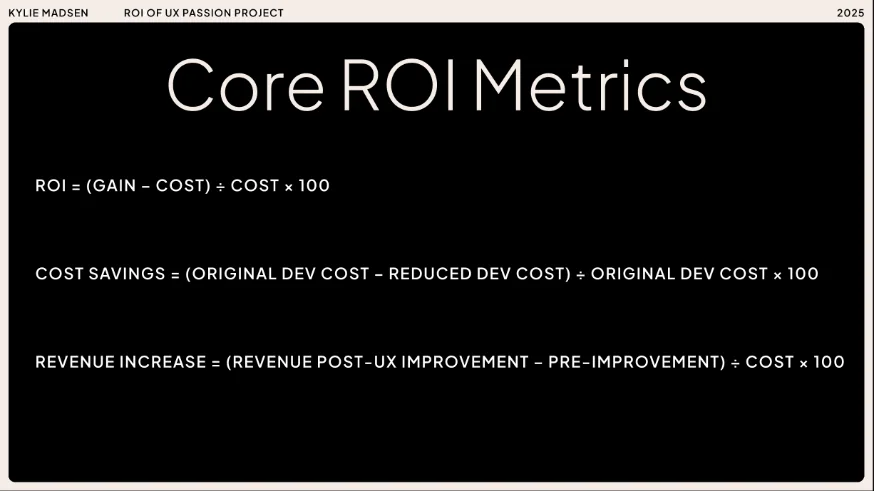
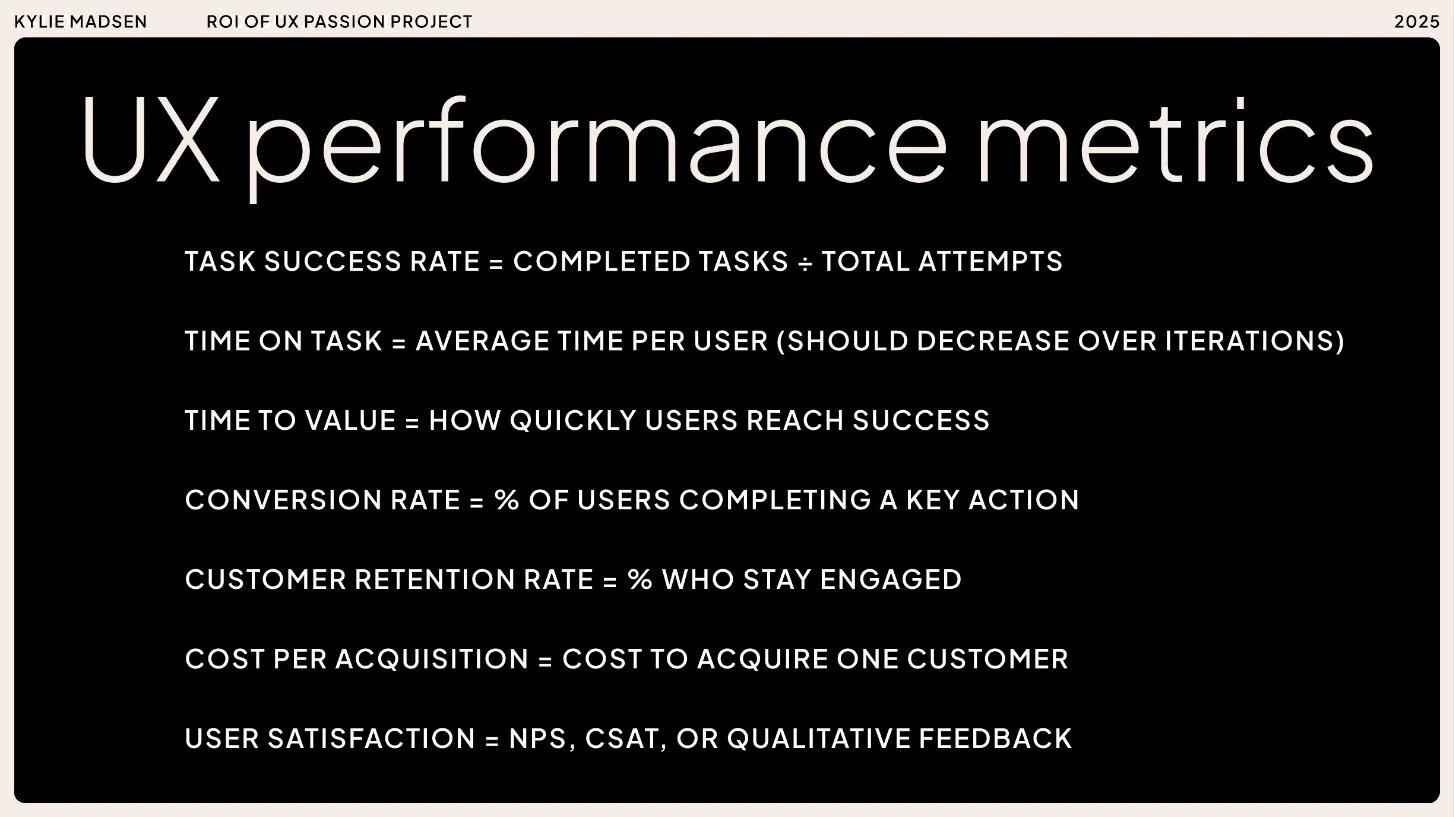
Every designer should know how to interpret and discuss a few key terms.
These metrics, paired with good validation testing, tell the whole story and help us prove value.
Finding the right metrics
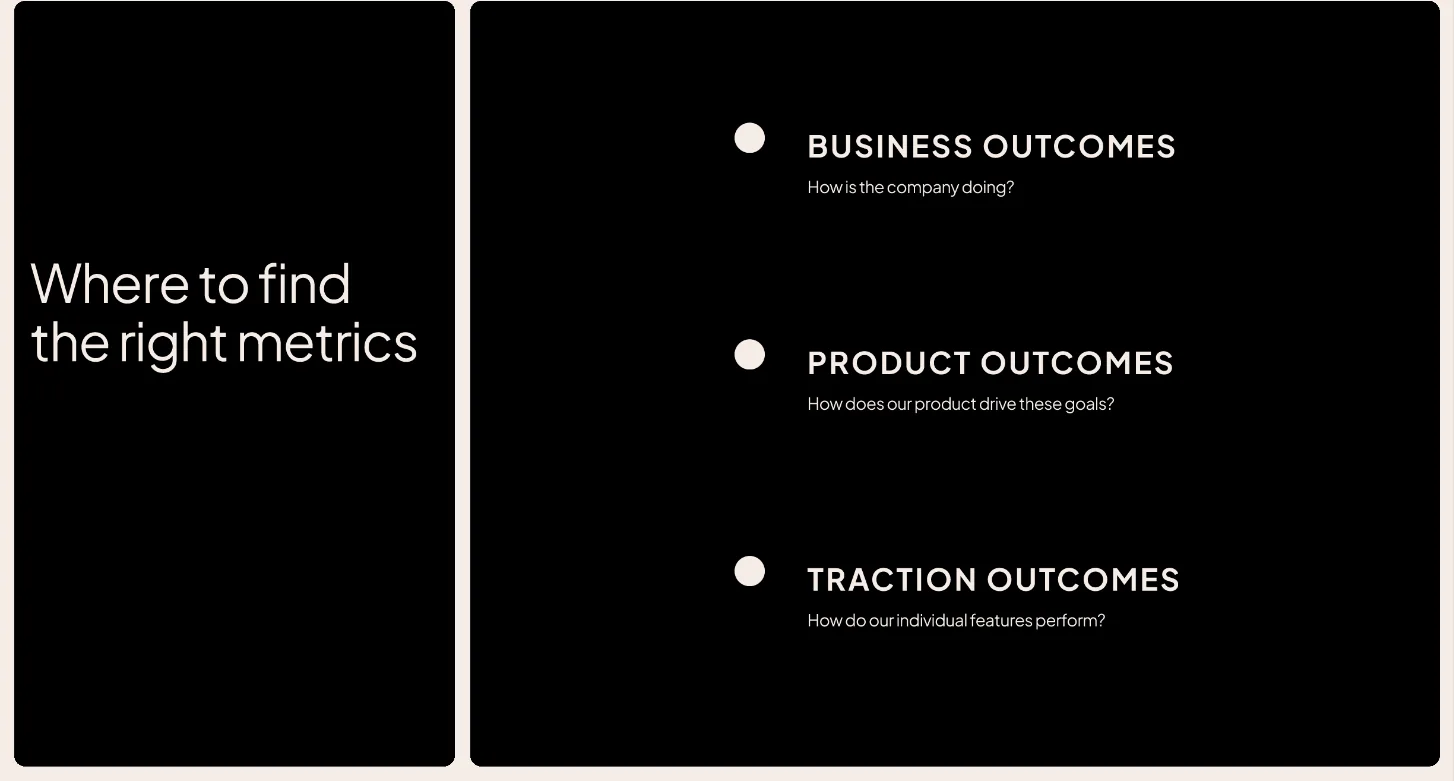
Teresa Torres’s Continuous Discovery Habits sorts metrics into three categories: business outcomes, how the company is doing; product outcomes, how the product drives those goals; and traction metrics, how individual features perform.
We don’t own all the data, and we don’t need to, but we need to know where to look. Partner with PMs, dig into dashboards, or talk with support teams. The goal isn’t perfection. It’s realistic estimates that connect usability to value.
The leadership imperative
In design leadership this isn’t optional; it’s essential. Your fluency shapes how the whole team is perceived, and directly affects how and when design gets a seat at the table.
A leader’s job is to protect their team’s time by prioritizing high-impact design work. When leaders can articulate how craft drives growth, reduces costs, or improves retention, they create credibility for the craft and move our role from a support function to a strategic driver.
Business fluency isn’t handing over our creativity. It means understanding how our work affects the bottom line, and communicating that clearly, confidently, and consistently. When we do that, we earn lasting influence. We stop fighting for a seat at the table, and build the table itself.
“Good designers never start by trying to solve the problem given to them; they start by trying to understand what the real issues are.”
Don Norman, The Design of Everyday Things
We’re taught to focus on the problem to find the real solution and remove risky assumptions, and it’s not a far jump to realize that sometimes design isn’t the solution. Making sure every design decision moves the business forward, and understanding that early, can be the most important accelerator in a career. For every project, go through the basics:
What’s the problem today, and what metrics prove it?
What do you want your solution to do for those metrics?
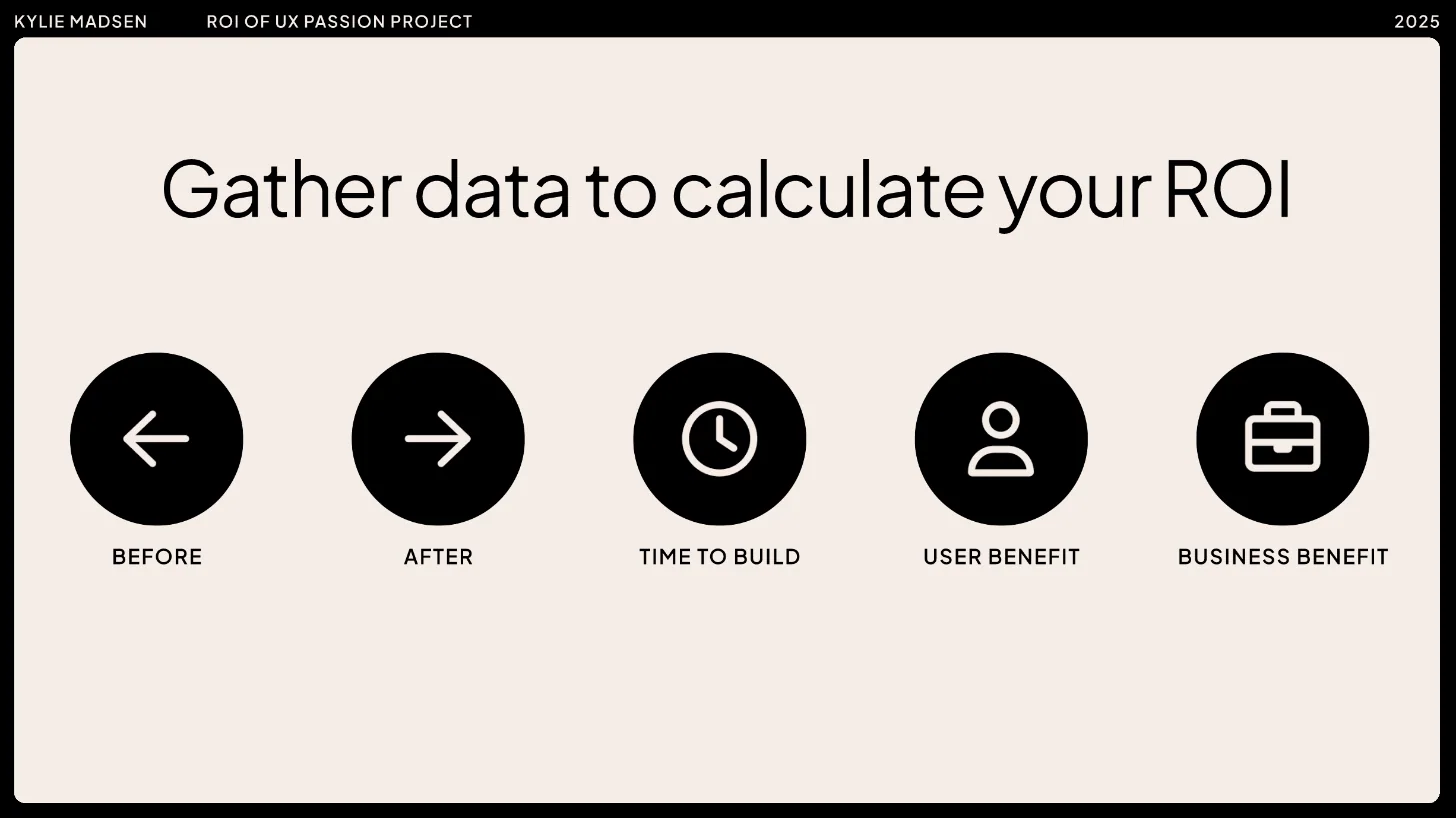
Gather data to calculate your ROI.
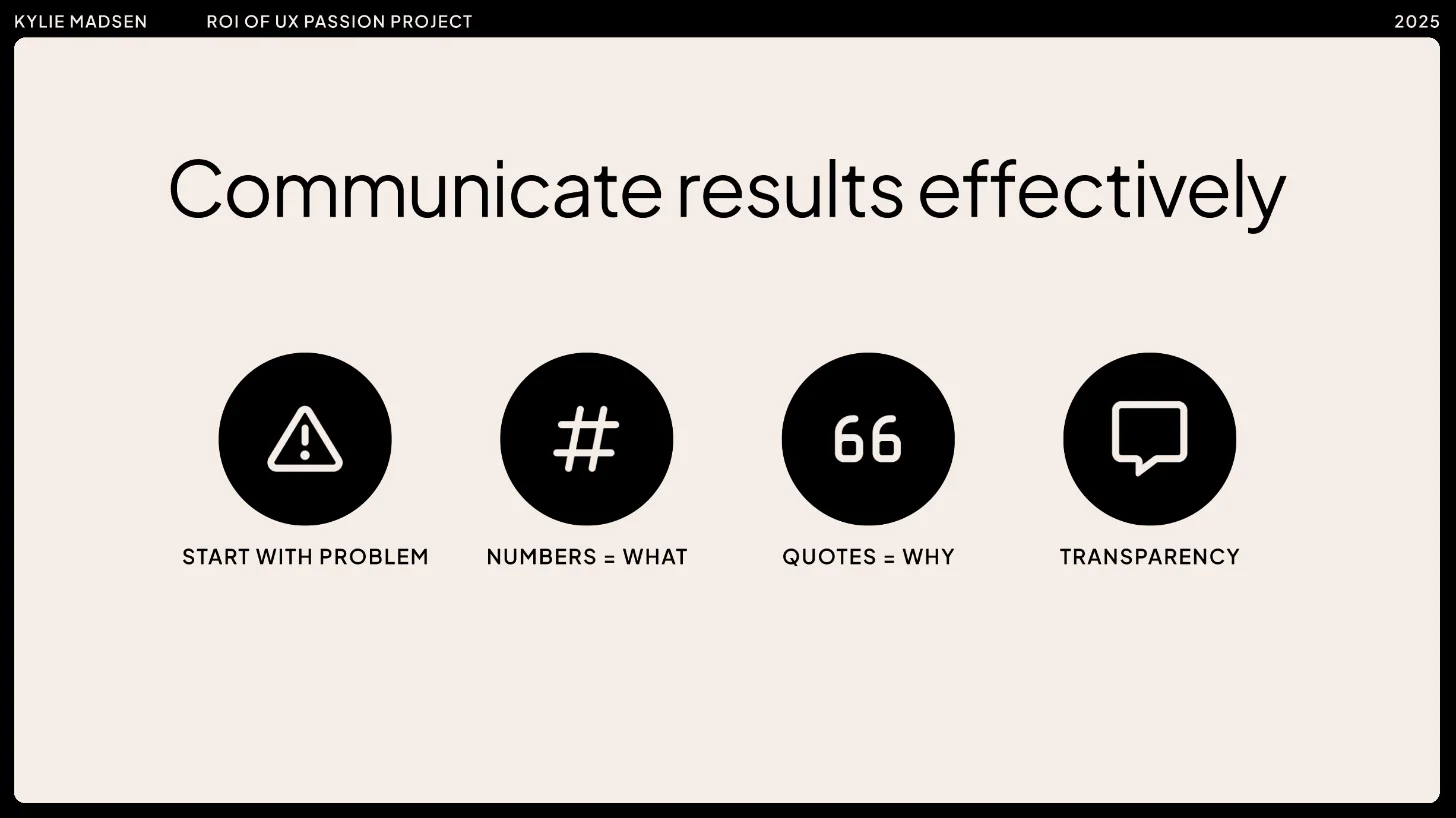
Communicate the results effectively.
Understanding ROI makes you a UXer who gets invited back. It gets you hired, and it gets you a seat at the table. When you can talk about real outcomes, you show you understand how the business works, and that fluency is what turns junior designers into strategic ones earlier and earlier.
Where this goes next
Nobody can tell the future. What I do know is that the next shift isn’t a new interface pattern, prototyping tool, or design trend. It’s a deeper understanding of systems and how they work together.
As products scale and expectations rise, we need to think beyond tying screens to business value, and tie systems to business value. Jakob’s Law reminds us that users spend most of their time in other products, so familiarity, predictability, and cohesion will always win. We have to balance that with pushing systems forward to match new technologies, making it all smarter, faster, and more natural.
Our value as UX craftspeople stays the same: solving real problems in new ways. The most successful product and design leaders translate human insight into strategic advantage, and understand that design and business are two sides of the same coin. As long as we stay anchored in the fundamentals of the craft while proving the value of what we create, UX will keep earning its place at the center of innovation.
Because true craft is extraordinary solutions through an intentional process. That’s the ROI of UX.
Acknowledgments
This project was made possible with the support of many colleagues, friends, family, and mentors. Thank you to my teams at Anonyome Labs and Sales Rabbit for your support and participation; your insights and conversations were invaluable to my learning. I’m grateful to my professors, advisors, and peers at Kent State University for their guidance. I couldn’t have done this without the support of my husband, Dallin, who kept me going through it all. And to my dad: I wouldn’t be half the person or designer I am today without your inspiration, mentorship, and guidance. I hope to honor your legacy through my work here and in the future.
Sources
Norman, D. (2013). The Design of Everyday Things. Basic Books.
Torres, T. (2021). Continuous Discovery Habits. Product Talk.
Cagan, M. (2018). Inspired: How to Create Tech Products Customers Love. Wiley.
Krug, S. (2014). Don’t Make Me Think, Revisited. New Riders.
Nudelman, G. (2023). UX for AI. Rosenfeld Media.
Spool, J. M. (2008). Web Form Design: Filling in the Blanks. Rosenfeld Media.
Nielsen Norman Group. (n.d.). Three Myths About the ROI of UX.
They Make Design on Medium. (2020). ROI of UX Design.
User Interviews. (2021). Calculating UX ROI: A Framework.
Eleken. (2022). UX ROI Case Studies.
Willis on Medium. (2021). The ROI of UX: Acronyms That Make Billions.
Kirkland, J. (2025). UX Design, Product Strategy & Tech Layoffs.
White, T. (2025). UX Design, UX Debt & Product Design.